
Rationalisation of Deviant Desire in Modernities: Henry Scott Tuke and Homoeroticism in late nineteenth-century Britain
To what extent did Henry Scott Tuke’s works subvert traditional representations of nudity in Late Victorian and Edwardian Britain by notions of deviant desire and homoeroticism?
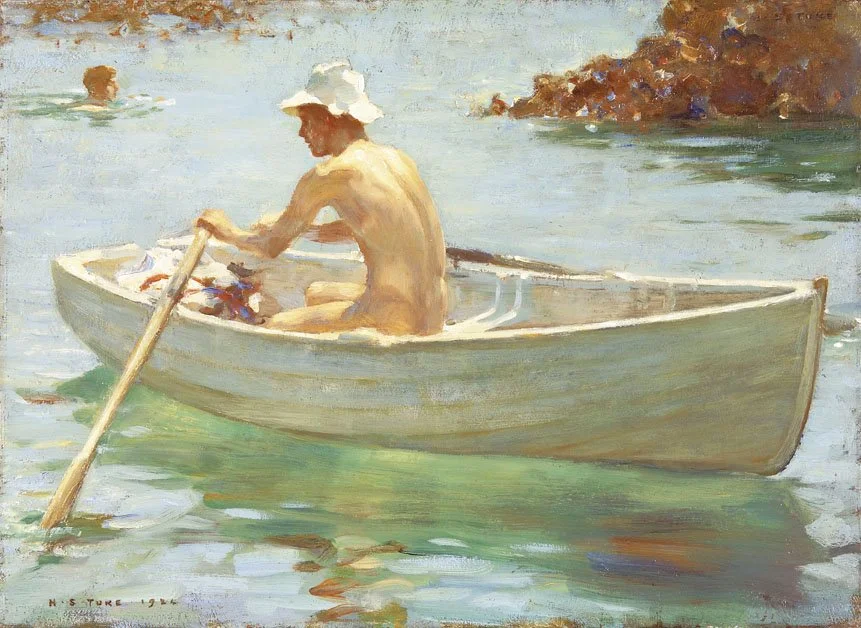
Homoeroticism and anything related to the representation of homosexuality or sodomitical activities had substantially been viewed as unacceptable and sacrilegious notions since the establishment of theistic institutions in many traditional Medieval European societies. Prior to the indirect catalyst of the Enlightenment leading to the French Revolution in 1791, the decriminalisation of homosexuality occurred in France, marking it as the first European nation to legalise such practices.
In late nineteenth-century Britain, alias Late Victorian and Edwardian period, criminalisation of homosexuality remained, the public widely thought that homosexuality ‘is associated with psychiatric disorder’ and ‘sex chromosome abnormalities and psycho- sexual disorders.’ Nonetheless, the visualisation of homosexuality and the visibility of queer eroticism were still perceivable in many artworks. For instance, Henry Scott Tuke (1858–1929), an English impressionist painter, gained renown for his masterful portrayal of the interaction between light and water, focusing primarily on the aesthetic allure of male figures in his artworks. Essentially, he embraced the technique of en plein air painting, skillfully rendering the naked forms of youthful male models against serene azure skies and natural sunlight.
The 2017 Tate Britain exhibition, ‘Queer British Art 1861-1967,’ featured Henry Scott Tuke’s works, spotlighting the ‘queer gaze’ and homoerotic interpretations in his art. Emphasising the portrayal of youthful male figures against Cornish seascapes, the exhibition prompted contemplation on the intersection of artistic representation, sexuality, and cultural contexts within Tuke’s creations. Engaging queer aesthetics and socio-cultural implications, the show created discourse and diverse criticisms on the idea ‘queer.’ One review from British art critic Laura Cumming pointed out that the exhibition ‘may include some works that originally had no clear position on gender or sexuality.’ However, this has not altered the core reception of Tuke’s works, which challenge traditional depictions of nudity and gender narratives from that period. The thesis of this essay is to explore the narratives of traditional representations of nudity in Late Victorian and Edwardian Britain and question to what extent painter Henry Scott Tuke subverted these narratives through the depictions of deviant desire and homoeroticism using Cornish seascapes and young male nudity as the subject matters of his works.
Traditional Representations of Nudity in Late Victorian and Edwardian Britain
The portrayal of nude human figures has been a significant theme in global artistic and cultural expressions over history, particularly in Western art. Nudity gained appreciation in ancient Greece from the sixth to fifth century B.C. The idealisation of human forms traces back to early representations like the ‘Venus of Willendorf,’ crafted around 28,000-25,000 B.C. in present-day Austria.
The portrayal of nudity in art has a complex history. In ancient Greek societies, nudity symbolises strength and beauty, often depicted in a natural and romanticised form. However, early Christianity associated nudity with sin, limiting its portrayal in art to religious contexts. The Renaissance saw a revival of nudity in art, influenced by a desire to idealise the human form akin to ancient Greece and Rome. During the Late Victorian period, the focus of this essay, the promotion of nudity in art was significantly championed by Queen Victoria and Prince Albert, both of whom were enthusiastic patrons of art collections that included nudity and eroticism. However, to ‘express clear moral or religious messages’ related to the British nationalistic theme, ‘vulgar or prurient’ works are still considered as obscene content.
In this period, new artists drew inspiration from Renaissance masters and classical ideals to depict nudity. Emerging British Victorian artists uniquely presented nudity within a provincial context, developing their own distinctive style by incorporating naked figures within the context of English literature, characterising figures such as 'Titania' from Shakespeare's ‘A Midsummer Night’s Dream’ Victorian audiences elevated nude art by associating it with classical themes, detaching sensuality. Despite criticisms linking nudity to vice, such art was considered 'high art' during the era.
Despite the fact that the late Victorian era was no prude, it is still evident that sexuality and genders have been illustrated in a heteronormative and patriarchal manner, manifestly constructed societal gender roles and how sexual orientations are perceived in the late Victorian and Edwardian society. A particular example would be J. W. Waterhouse’s oil painting “Hylas and the Nymphs” created in 1896 [see figure 1]. In this painting, Waterhouse illustrated a scene from the Greek and Roman myth of the sorrowful youth Hylas, as narrated by Ovid and other ancient authors, where the captivated Hylas is taken away by Naiads (female water nymphs) as he searches for water to drink. Hylas is depicted half-clothed, kneeling by a pond, facing seven naked nymphs. The nymphs' expressions entice Hylas to join them in the water.
When examining this painting through a contemporary lens, the portrayal of its figures may be deemed anachronistic, potentially carrying sexist undertones. Initially, the physical forms and positions of Hylas and the nymphs suggest the establishment of a gender hierarchy, reflecting patriarchal norms wherein the female nymphs seek to allure Hylas through nudity and gazes that incite sexual desire. Additionally, the painting exemplifies the notion of the ‘male gaze’ and objectifies women by portraying them as objects of sensuality. Lastly, and more importantly, the seductive dynamic within the painting is characterized by a heterosexual relationship, reinforcing traditional societal views on sexuality and gender, wherein homosexual relationships were often stigmatised as sinful or taboo.
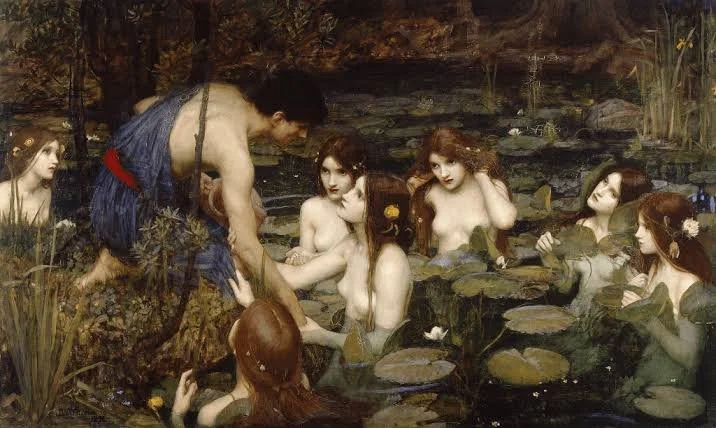
Fig.1. Hylas and the Nymphs by John William Waterhouse. Oil on canvas, 1896. 98.2 x 163.3 cm.
Henry Scott Tuke’s Depiction of Male Nudity and Homoeroticism
Naturism during the late Victorian and Edwardian era emerged as a significant genre within British nude art. Among the artists who embraced this cultural movement was Henry Scott Tuke. During this period, ‘Cornish’ art enjoyed considerable popularity, attracting artists like Tuke to the coastal landscapes of southern Britain. Although Tuke produced numerous portrait paintings and drawings across various subject matters, his most acclaimed works continue to be those that feature young nude boys engaging with the coastal scenery under the radiant sun.
An illustrative example of Henry Scott Tuke's distinctive style can be observed in his 1903 oil painting ‘Noonday Heat’ [see figure 2]. This artwork captures Tuke’s signature approach: a vibrant Mediterranean color scheme that captures how sunlight interacts with the fair skin of the youthful male figures; pale, with tones of ivory and russet tan, showcasing an athletic, slender physique reminiscent of ancient Greek marble statues. Within this painting, Tuke employs impressionist techniques and bold brushwork to depict two young nude male models reclining and unwinding on the beach. The interplay of light in the scene creates a warm and inviting ambiance, yet simultaneously invites viewers to contemplate the enigmatic nature of these nude figures. While frequently depicting unclothed male youths in sunlit settings, Tuke refrained from overtly linking his art to homosexuality. The ambiguity in his works allows for diverse interpretations, creating an intimate yet enigmatic relationship between subjects, viewers, and the artist. Tuke’s approach, unlike that of some contemporaries, avoids explicit statements on homosexual themes, adding depth to the paradox of his art.
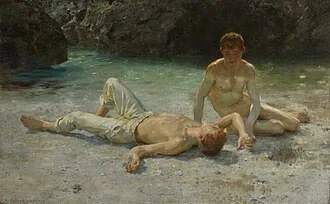
Fig. 2. Noonday Heat by Henry Scott Tuke, 1903, oil on canvas
The ambiguity surrounding the portrayal of the two unclothed male models in this painting may stem from societal views on homosexuality, which were largely taboo during Tuke’s time. Despite this, the central positioning of these youthful nude figures in the artwork creates a unique and enigmatic narrative within the nude art of the era. Tuke’s depiction of ‘male nudity’ breaks through traditional representations of nudity, as seen in Waterhouse’s ‘Hylas and the Nymphs,’ sets his work apart by removing naked bodies from mythological and religious contexts, drawing away from the norms of late Victorian and Edwardian Britain. The celebration of the beauty of unclothed men under the sunlight in Tuke's work sparked both iconic admiration and contentious debates.
The Uranians and Rationalisation of Deviant Homoerotic Desire
A significant illustration of the reception of Tuke’s work during his era, which has shaped the alignment of his works with themes of homoeroticism and homosexuality, lies in the widespread popularity of his creations among the Uranians. This clandestine cohort of English homosexual poets and prose writers, active in the late Victorian and Edwardian periods, predominantly focused on producing works that revolved around the notion of same-sex male affection or the love shared among adolescent boys.
The Uranians espoused an idealised veneration for the ancient Greek appreciation of male nudity, coining the epithet ‘Uranian Aphrodite’ from Plato’s philosophical works. This epithet symbolised a form of affection among men that was revered for its elevated spiritual essence, transcending mere physical desires to encapsulate a genuine admiration for the intellectual and sagacious attributes of one’s companion. In the late Victorian era, any novel ideologies or concepts intertwined with ancient Greek history or mythology were held in high regard, for Hellas was perceived as the cradle of Western civilization. Consequently, the Uranians extolled the beauty of masculinity intertwined with the figures of Greek lore, such as Ganymede, aligning their aesthetic and philosophical inclinations with the cultural legacy of antiquity.
In parallel to the advocacy of the Uranians, Tuke’s work subtly incorporates the influence of Hellenic idealism within his artistic compositions. An example of this influence can be observed in another oil painting by Tuke, ‘August Blue’ [see figure 3], created in 1893, which intricately portrays the interplay of sunlight, the marine landscape, and nude males. The ethereal and polished depiction of four young semi or fully unclothed male figures on a boat, set against the azure, crystalline ocean under the serene brilliance of sunlight, evokes a palpable sense of timeless antiquity. The artwork captures a moment at Falmouth harbor, depicting four young men engaged in aquatic activities. One individual clings to a rowboat in the sea, another stands within the vessel grasping a cloth, while the remaining two are seated; one reclining under the sun at the stern and the other leaning forward near the oars. The blue color palette harmonises with the title, with the sky’s golden luminance casting vivid tones above, while the calm blue waters reflect the boat’s shadow. Moored boats with square-rigged sails in the background enhance the maritime ambiance of the scene.
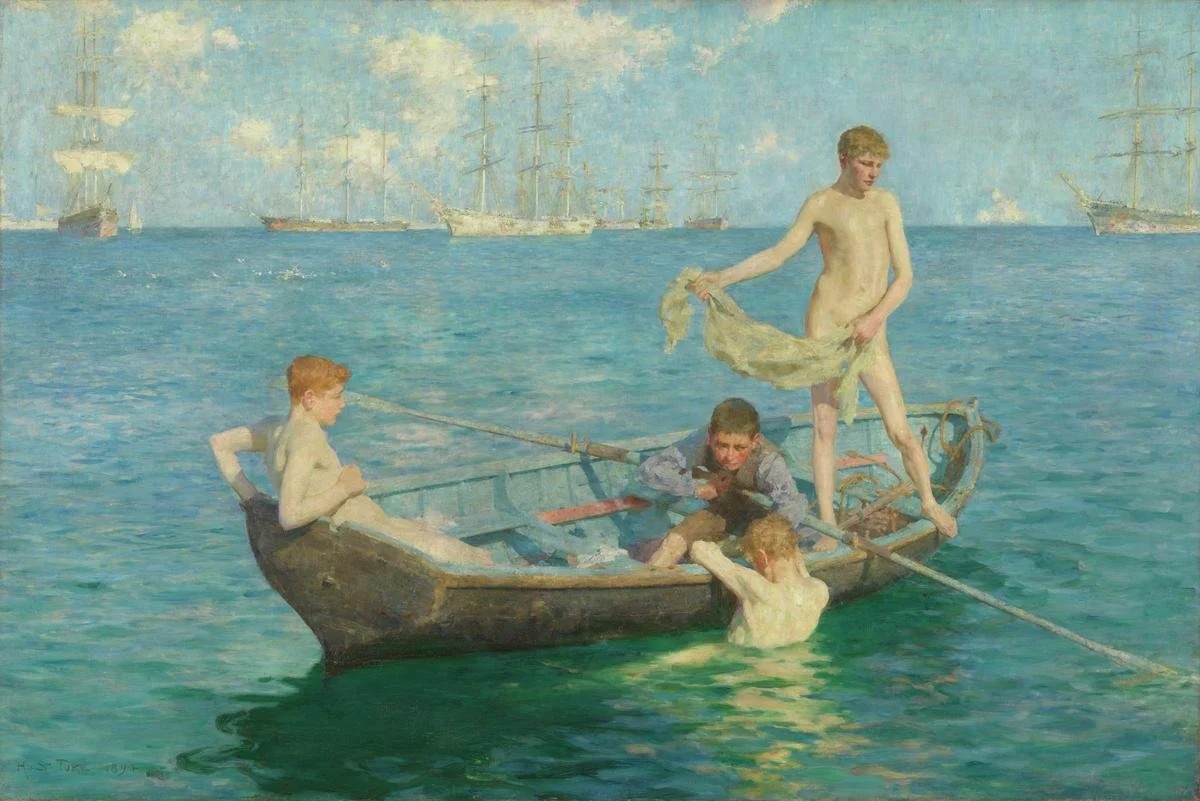
Fig. 3. August Blue by Henry Scott Tuke, 1893, oil on canvas
In contrast to the explicit nudity and overtly sexual poses found in Von Gloeden's photographs, Tuke’s works refrain from showcasing exposed genitals or overtly sexual gestures. This insight highlights the intricacy of Tuke’s artistic expression, especially considering his depiction of Mediterranean sunlight and youthful male figures within a societal backdrop where homosexuality was legally forbidden in England at the time. This painting, once again, invites interpretation within a sense of ambiguity, offering viewers multiple pathways for analysis: whether as a celebration of athletic masculinity echoing the spirit of Hellenic culture, a portrayal of youthful purity set against a backdrop reminiscent of a past rural utopia, or as carrying an implicit homoerotic charge as posited by the Uranians. The Uranian poets and writers interpreted Tuke’s works through a Hellenic-focused lens, with Charles Kains Jackson, a member of the Uranians, even dedicating a homoerotic sonnet titled ‘Sonnet on a picture by Tuke.’ The Uranians’ reception of Tuke’s late Victorian artworks created poetic, erotic responses, contributing to the link between Tuke’s works and the represented visualised notion of homoeroticism of that era.
In exploring the traditional representations of nudity in Late Victorian and Edwardian Britain and Henry Scott Tuke’s potential subversion of these narratives through depictions of deviant desire and homoeroticism, it is evident that the reception, associations, and interpretations of nude art have evolved over time in response to changing social and cultural norms. While H.S.Tuke himself may not have intentionally rationalised deviant homosexual desire in his paintings of male nudity or sought to subvert traditional representations for modernisation as suggested by art critic Laura Cumming, the varied reception of his work by different groups and critics such as the Uranians has indeed challenged the normative gender politics. This has ultimately led to Tuke’s recognition in numerous prominent fine art institutions in Britain, presenting the dynamic nature of art reception and interpretation within the context of relational aesthetic theory.