


CONVERSATIONS WITH JOSHUA LEAUNG
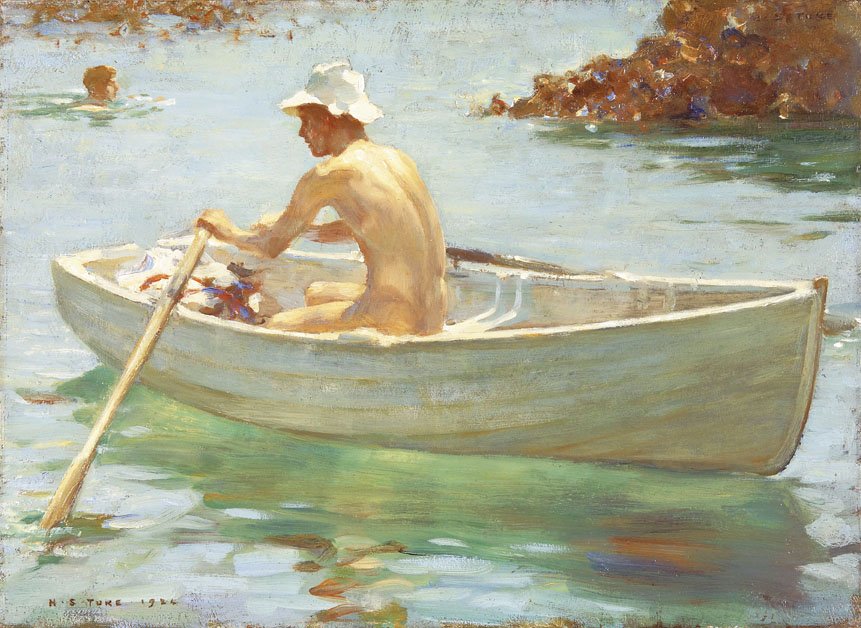
Rationalisation of Deviant Desire in Modernities: Henry Scott Tuke and Homoeroticism in late nineteenth-century Britain
Homoeroticism and anything related to the representation of homosexuality or sodomitical activities had substantially been viewed as unacceptable and sacrilegious notions since the establishment of theistic institutions in many traditional Medieval European societies. Prior to the indirect catalyst of the Enlightenment leading to the French Revolution in 1791, the decriminalisation of homosexuality occurred in France, marking it as the first European nation to legalise such practices.
In late nineteenth-century Britain, alias Late Victorian and Edwardian period, criminalisation of homosexuality remained, the public widely thought that homosexuality ‘is associated with psychiatric disorder’ and ‘sex chromosome abnormalities and psycho- sexual disorders.’ Nonetheless, the visualisation of homosexuality and the visibility of queer eroticism were still perceivable in many artworks. For instance, Henry Scott Tuke (1858–1929), an English impressionist painter, gained renown for his masterful portrayal of the interaction between light and water, focusing primarily on the aesthetic allure of male figures in his artworks. Essentially, he embraced the technique of en plein air painting, skillfully rendering the naked forms of youthful male models against serene azure skies and natural sunlight.

Art as a Battleground: Defiance of Authoritarianism through Documentational Art in Ukraine and Hong Kong
Cultural conflict, or to a greater extent the "cultural war," is a concept originating from Germany (Kulturkampf) that is now universally used to explain the phenomenon when people from different cultures or geographical regions hold conflicting values, beliefs, and social norms. Both in Hong Kong and Ukraine, the native populations have experienced various forms of cultural conflicts with the predominant groups of immigrants from Communist China and Russia, respectively. In a diverse and inclusive community, different voices, art, and cultures can harmoniously coexist. However, as the "cultural invasion" by both major powers continues to intensify, it exacerbates the situations, leading to a scenario where the "new culture" of the People's Republic of China (PRC) and Russia dominates over the original domestic cultures in Hong Kong and Ukraine.
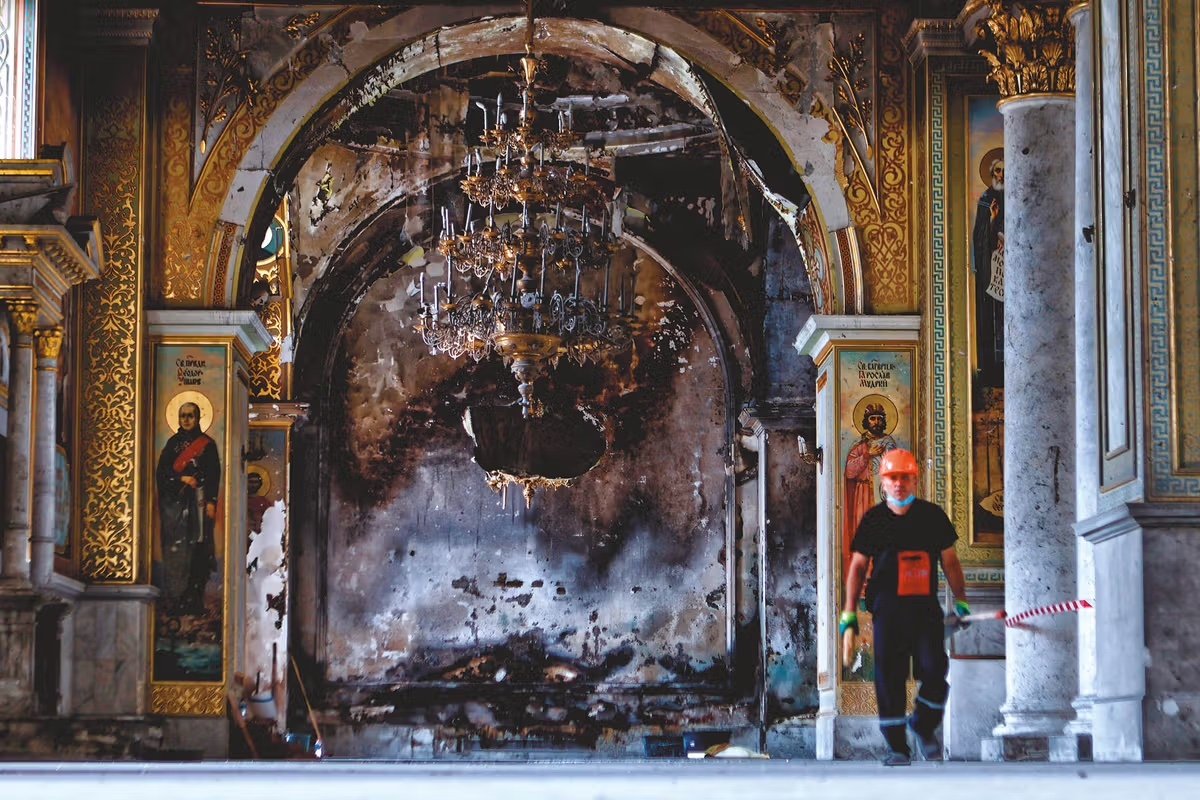
Art as a Battleground: Preservation of Identities, Power, and History in the Shadows of Political Turmoil
Conflicts in specific geographical regions have deplorably reverberated across the world, introducing new controversies into Western academic discourse through the evolution of intersectional political structures. How should these histories be approached and deliberated upon within the framework of Western European discourse? What ethical obligations do individuals engaged in the study or practice of art and culture carry? While these questions may seem ambiguous, perhaps we all possess unique perspectives that shape our understanding of these concepts.

Exploring Cultural and Gender Identity through Symbolism: Hong Kong's "Third-Culture" Artist, Riya Chandiramani
In today's art world, many contemporary artists choose to associate their work with their own identities. Through their artistic expressions, they convey a unique set of characteristics that represent and define their individuality. The concept of identity has been a recurring and extensively discussed topic throughout art history. Artists often reflect upon themselves and explore thought-provoking ideas pertaining to various identities, including but not limited to gender, race, religion, and social and cultural. This process allows them to dig deeper into their inner selves and investigate contemporary culture by examining the intricate relationship between art and identity. Through an understanding of their environment and artistic practices, artists strive to redefine the conventional notions of identity.

The Language of Colours and Compositions: Emotional Expression in Stanley Whitney and Peter Doig's Paintings
To speak of contemporary paintings today, they are typically defined as paintings created between the 1960s and the present. Professionals in the industry also assert that contemporary paintings should incorporate references to art history alongside a contemporaneous context within their subject matter, and that the artists should still be alive. Unlike other contemporary art mediums, paintings represent the most traditional two-dimensional visual language and are often regarded as "the expression of ideas and emotions, with the creation of certain aesthetic qualities" (P.D.Owen, 2023) Therefore, within the realm of contemporary art, painting serves as a conduit for artists to articulate their innermost emotions and sentiments. This is accomplished through various artistic elements, such as the use of colours and compositions, deliberate brushstrokes and techniques, and, ultimately, the act of painting itself. This article explores how contemporary painters, Stanley Whitney and Peter Doig, expressively convey their inner feelings through the medium of painting, with a specific focus on their idiosyncratic use of colours and compositions.